One Person, Many Directions — Why It Makes Sense in the Age of AI
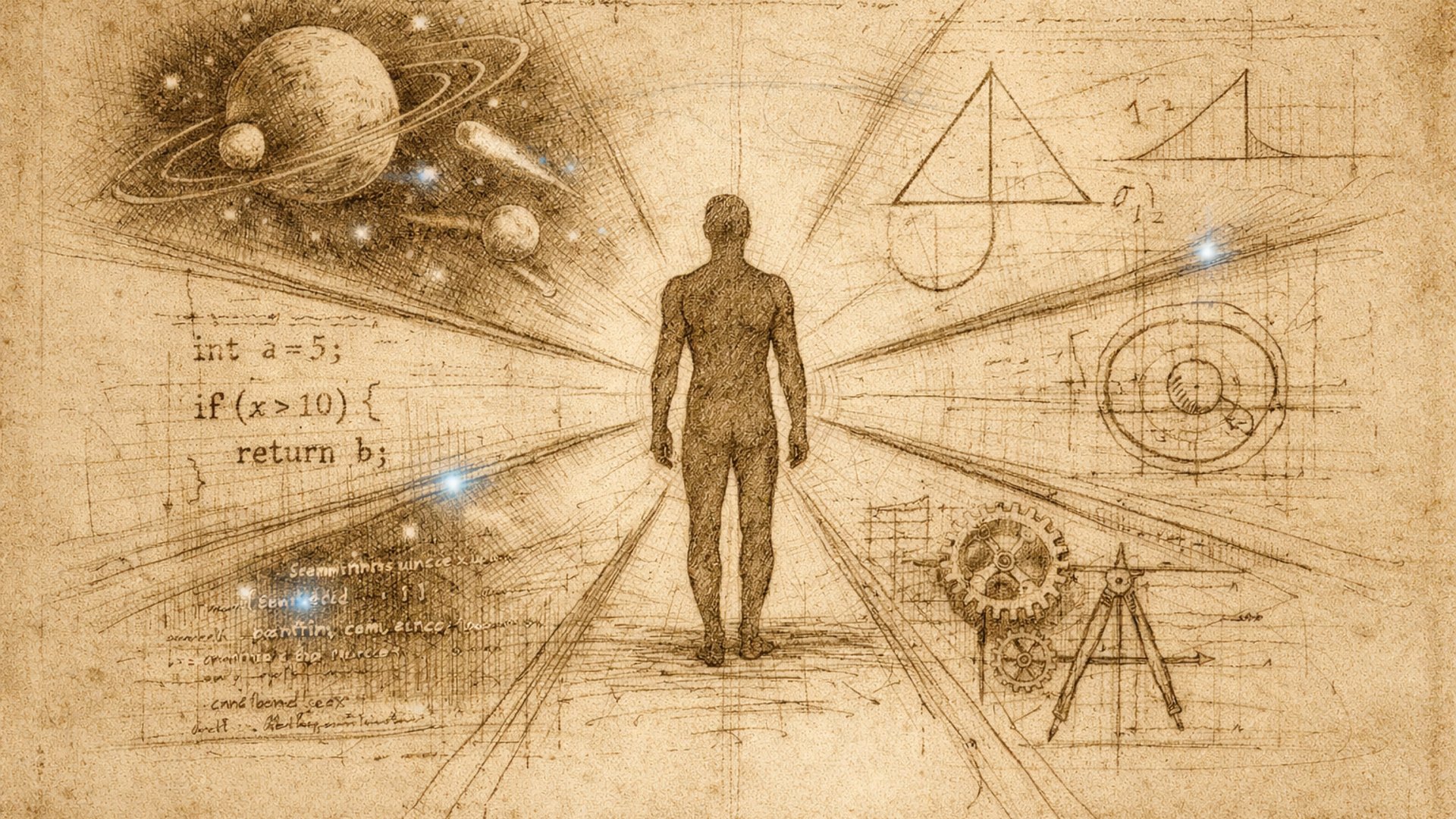
When Leonardo da Vinci designed flying machines, painted The Last Supper and studied human anatomy, no one asked him:
“But who are you really — an engineer, a painter, or a scientist?”
That made sense. For several hundred years.
Today, however, something is changing.
That question appeared later, when the world began to demand specialisation. The more humanity knew, the narrower the path of an individual had to become. To be an expert meant dedicating decades to a single fragment of reality.
Tools That Extend Our Reach
I am not claiming to be Leonardo. What I am claiming is that I have access to something he did not: tools based on artificial intelligence that allow work in multiple directions at once — without the need to spend a decade mastering each of them from scratch.
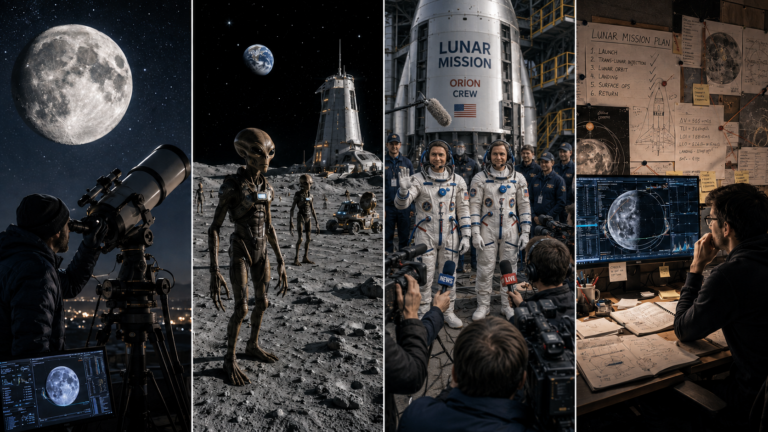
When I design a concept for an interplanetary mission, I do not have to perform all orbital calculations myself. When I write code, I do not need to remember every piece of syntax or every library. When I analyse linguistic data, I do not have to manually review millions of words.
I have partners — Claude, ChatGPT, Cursor AI and other AI-based tools — that act as an extension of my mind. They do not replace thinking. They accelerate it. They allow me to ask bigger questions and reach interesting answers more quickly.
This is not magic. This is a new way of working.
What This Means for AI907
This blog could be devoted to a single topic. I could write exclusively about programming, only about AI, or only about space. That would be simpler — both for me and for readers.
But it would miss the point of what I want to demonstrate.
If human–AI collaboration truly changes the rules of the game, then a natural consequence of that change should be versatility: the ability to move between disciplines and to connect areas that previously required separate specialists.
That is why AI907 will develop several parallel paths:
- Cosmic Journey — space exploration
- Human–AI Collaboration — collaboration between humans and AI
- Vibe Coding — AI-assisted programming
- Research & Knowledge — analysis and research
- Intention & Identity — texts about the project itself and its direction
Not as a collection of unrelated topics, but as a single way of thinking, applied in different contexts.
Why I Start with Space
I could start with anything. But space has one characteristic that makes it an ideal testing ground for human–AI collaboration: scale.
When you ask:
“How do you drill through Europa’s ice to reach the subsurface ocean?”
intuition or a single field of knowledge is not enough. You need physics, engineering, an understanding of environmental conditions, and creativity in solving problems no one has faced before.
And you need someone — or something — to help search the space of possible solutions faster than you could alone.
Space does not forgive small questions. Each one leads further.
Who This Is For
For people who enjoy thinking. Who are not afraid of texts that combine calculations with narrative. Who are curious about what becomes possible when you stop working alone.
For scientists, programmers, business people — but also for anyone who has ever thought:
“I would like to do more things, but a day has only 24 hours.”
Perhaps those 24 hours will turn out to be enough for more than we expected — if we learn to work differently.
Let’s find out.