Strategic break
The past month has been a time of focusing on other projects and recharging. I’ll be back soon with new topics.
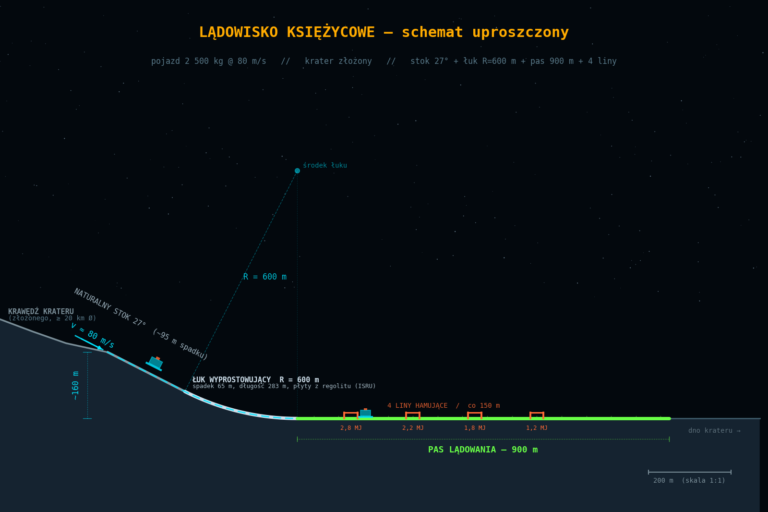
Short answer: yes. Long answer — below. Introduction The Moon has no atmosphere to slow down a landing vehicle. No airport to receive it. Every kilogram landing on its surface has to brake using engines alone — burning fuel that itself had to be flown there. It’s a closed loop. Expensive, single-use, energy-intensive. And yet…
The AI Era, the LLM Era, and the Problem of Naming Our Own Times Imagine you’re talking to a language model and you want to say something simple: that you mean the time from when all of this started. The time when a conversation with something non-human suddenly became possible in a way that had…
You’re reading an article. The topic pulls you in. But after the conclusion, a question appears that the article didn’t ask — or asked, but not in the direction that interests you. You can close the tab. You can look for another article that might not exist. Or you can ask a language model —…
Launch, orbit, the Moon. But somewhere between the broadcast and reality, there’s a layer worth seeing. April 1, 2026, 22:35 UTC. SLS lifted Orion from Launch Pad 39B at Kennedy Space Center. On board: Reid Wiseman, Victor Glover, Christina Koch, and Jeremy Hansen — four people heading toward the Moon for the first time in…
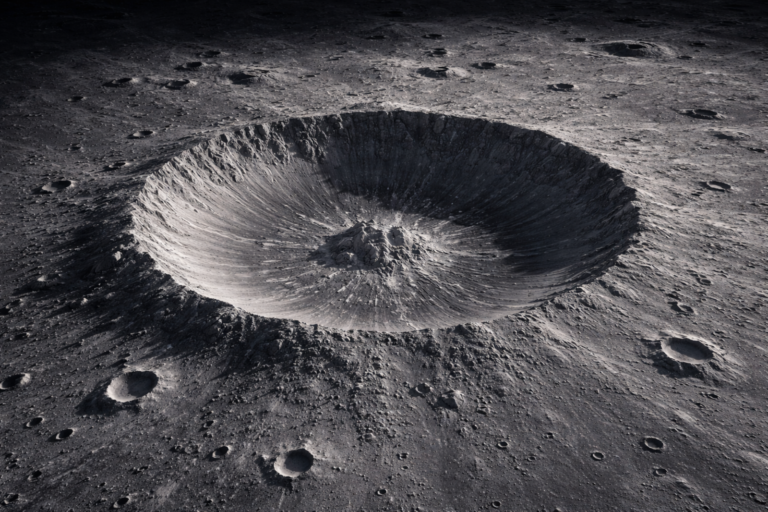
Earth erases its traces. The Moon does not. Nothing on Earth lasts forever in its original form. Rain, wind, tectonics, water — they work together to keep every surface in constant motion. A meteor crater vanishes within millions of years. A human footprint — within minutes. The planet is alive, and because of that it…
Summary: I describe a research project that attempts to estimate a relative height map of the Moon’s surface from a single orbital photograph. No stereoscopy, no machine learning — just classical shadow analysis, brightness gradients, and georeferenced data. The Problem: 3D from 2D Every photograph of the Moon’s surface is a projection of 3D onto…
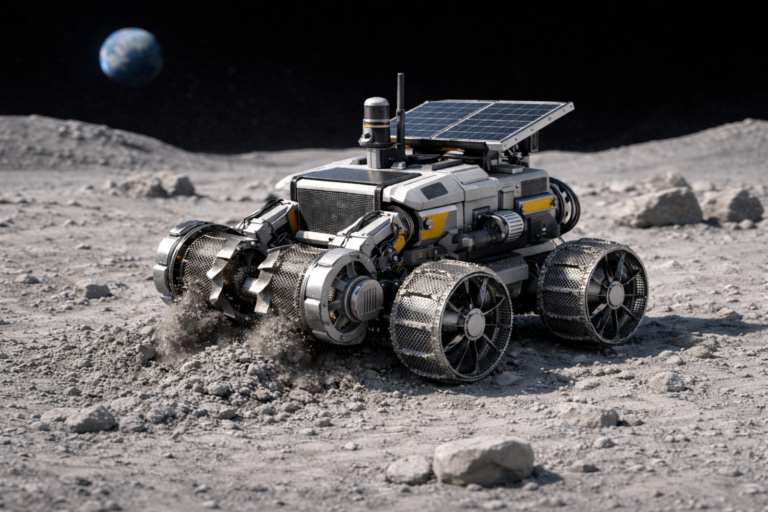
Conventional thinking about lunar survival focuses on the poles. The nights are shorter there, conditions more forgiving, energy available almost continuously. This mission is somewhere else. We’re sending a team of miniature construction machines to the Moon. The goal: locate a suitable boulder arrangement, build a habitat measuring 2×2×1 meters, cover it with regolith —…
In theory, every serious lunar habitat design assumes a regolith layer for protection. In renders and presentations, it vanishes. This gap between physics and vision reveals something important about where we actually stand. Where We Left Off In the previous article, I ended with a question: what can actually be done with regolith — that…
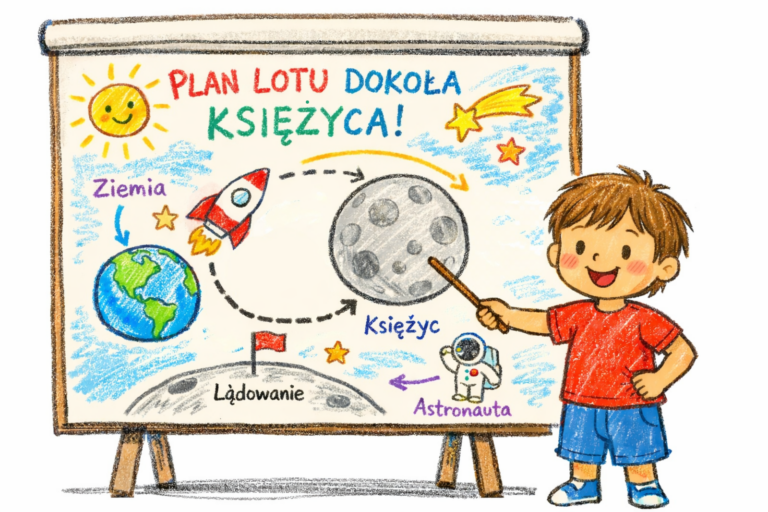
Artemis 2 Is Coming (According to Plan) Soon — if the schedule holds this time — four astronauts will fly around the Moon. Not land. Fly around it. The first crewed mission toward the Moon since 1972. Over half a century of absence. The Artemis 2 launch has been postponed multiple times. The most recent…