When Skill Is No Longer Proof
For decades, we knew how to measure a person’s value at work. AI is changing those rules — and no one yet knows what to replace them with.
Something I Was Very Good at Is Now Free and Abundant
In early 2026, Aditya Agarwal — one of Facebook’s earliest engineers, later CTO of Dropbox, the man who scaled that company’s engineering team from 25 to a thousand people — posted a few sentences on X that spread across the entire English-speaking internet.
He wrote that he had spent a weekend coding alongside Claude. And that it had become absolutely clear to him: we will never write code by hand again. Then he added the sentence that is the key to this whole story: *”Something I was very good at is now free and abundant. I am happy… but disoriented.”*
A few weeks later he expanded on that thought in an essay published originally in The Information. He wrote about something far harder to absorb than ordinary professional obsolescence: he noticed that during that same weekend, AI agents were building social networks from scratch — exactly the kind of product he had spent the early years of his career creating at Facebook. Both how he worked and what he built had been replaced at once. Within 48 hours.
His reaction — a mixture of wonder and deep sadness — is not personal in the sense that it concerns only him. It is representative. And it deserves a closer look, because it contains something that the mainstream conversation about AI almost never addresses.
It’s Not About Work. It’s About Status.
Most of the public conversation about AI and employment circles around one question: how many jobs will disappear? McKinsey, Goldman Sachs, the World Economic Forum supply the numbers. Politicians talk about reskilling. Journalists write headlines like “AI will take your job.” The counter-narrative says the opposite: there will be more millionaires than ever, AI will grow the pie.
Both sides are talking about economics. About income, employment, the labour market.
Agarwal was talking about something else. He was talking about status — and about the fact that the foundations on which it had been built throughout his entire adult life had suddenly become unstable. This is a different experience from losing a job. You can lose a job and still retain your sense of professional self-worth. What is at stake here is something harder: a situation in which a skill you spent years acquiring, and through which you were perceived in a particular way by others, becomes — literally — free and universally available.
Throughout the history of professional life, people have built status through the difficulty of acquiring skill. Programming required years of study, practice, the ability to think abstractly and precisely at the same time. Literary translation required decades of immersion in two languages. Medical diagnosis required thousands of hours on hospital wards. The difficulty of acquisition was a signal of quality — and a mechanism for creating social hierarchies that gave meaning to the effort invested in learning.
AI does not so much eliminate these skills as sever them from their output. And that is what changes the rules of the game in a way that economic models cannot capture.
Researchers from Taylor & Francis who in 2025 analysed the psychological impact of AI on Indian IT professionals named the phenomenon precisely: study participants felt not only skills-obsolete, but “undesirable” — suggesting that the distress goes beyond technical obsolescence and enters the realm of symbolic dispossession. In other words: it is not just about whether you can do something. It is about whether your ability to do it still carries value in the eyes of others.
This is a very old human question that AI has posed anew — and this time, it has posed it to millions of people simultaneously.
The Anxiety That Has No Name Yet
There is something distinctive about the way people describe what they feel in relation to AI. They speak of “anxiety,” of “disorientation,” of a sense that something is changing but they cannot say exactly what. Surveys show that more than half of workers in the United States report concerns about AI’s impact on the future of their work. But when asked more precisely — it turns out that those same people are often not afraid of unemployment. They are afraid of something harder to name.
Researchers from Frontiers in Psychology describe “AI anxiety” as a phenomenon operating on three layers: cognitive concerns about competence obsolescence, negative affect when encountering AI-related information, and behavioural tendencies — avoidance or compensatory overreliance on the tools themselves. These three layers together form something that sounds like classical existential anxiety — but its object is new and difficult to describe using existing language.
Philosophers of technology are beginning to build that language. A paper published in 2026 introduces the concept of “epistemic automation” — the systematic transfer of knowledge-producing functions from human agents to algorithmic systems. The key observation is this: the human being ceases to be the primary subject in the process of generating knowledge and becomes instead a second-order evaluator of algorithmically generated outputs. This is a shift that concerns not only the labour market, but the fundamental meaning of performing certain intellectual activities.
Agarwal put it in his own way, writing that this period *”is teaching me what it means to be human again — not in the romantic, AI-can-never-replace-us sense, but in the uncomfortable sense, the part where you have to let go of the thing you were in order to become the thing you might be.”*
That sentence is honest and good. But it does not answer the question that remains open: if for decades we knew how to measure a person’s value through their skills — what do we measure it by now? And what happens to people who spent their entire professional lives internalising a particular value system, only to watch it change radically — not gradually, across generations, but within the span of a few years?
This is not a fear of unemployment. It is a fear of irrelevance. And it is something for which the dominant narrative about AI — economic, statistical, headline-driven — has no category.
People We No Longer Need — and the Question of Recognition
There is one more thread that usually appears separately, though it is deeply connected to the previous ones.
When AI performs a task — writes a text, translates a document, generates code — the person on the other side of the screen sees a result. They do not see the process. They do not see the effort that someone might have put into it. They do not know — and often do not ask — whether it was written by a human with five years of experience or by a language model in five seconds.
For most of the history of value creation, who made something mattered. Not only for reasons of quality — because a master craftsman made something better than an apprentice — but for social reasons. Recognition was built into the structure of professional relationships. People knew who had done what. It was understood how much effort that had cost.
AI did not dismantle this structure in a single move. It did something subtler: it made the result visible and the effort invisible. For many people this shift is deeply disorienting, because it strikes at the mechanism that underpinned their sense of professional self-worth — a mechanism that the human brain, evolved for life in social hierarchies based on recognition and acknowledgment, treats as something foundational.
PNAS Nexus describes this phenomenon precisely: generative AI does not merely alter practices — it fundamentally transforms the valuation of knowledge and skills. When AI exceeds the level of human skill in a given domain, the incentives to master that domain to the point of excellence weaken. This is not just an economic calculation. It is a change in the logic that for decades organised the meaning of learning itself.
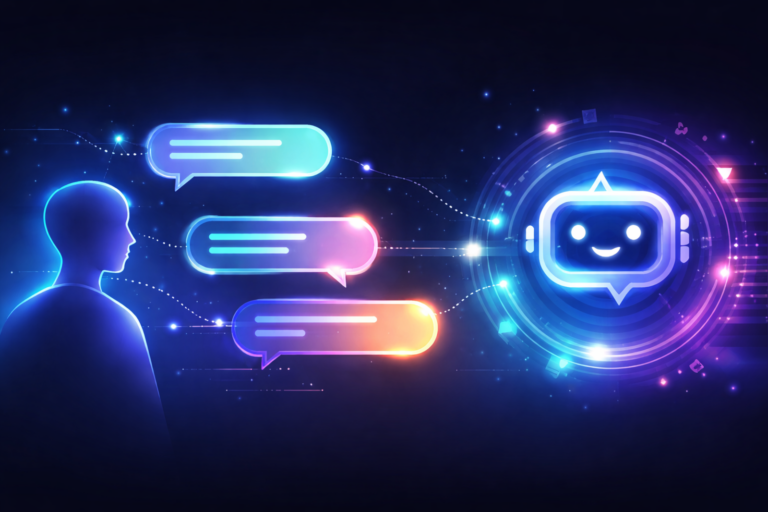
At the same time — and this is perhaps the most subtle of all the threads — the amount of time people spend in conversation with AI systems is growing. A 2025 MIT and OpenAI study encompassing nearly a thousand participants and over 300,000 messages found that higher daily chatbot use correlated with higher feelings of loneliness and lower socialisation with other people. A longitudinal study involving more than two thousand adults from four Western countries confirmed the direction: increased use of social chatbots predicted increased feelings of isolation.
This is not an argument against AI as a tool. It is an observation that something is shifting in the structure of everyday relationships — and that this shift is layering on top of a loneliness epidemic that already existed in the Western world. A person who converses more frequently with a language model than with other people does not thereby become more connected. They become less.
What Remains
Agarwal — though he wrote an essay full of genuine sadness — did not stop at lament. He also wrote about the fact that adaptability is becoming the new currency. And importantly, that it is — unlike a degree from a prestigious university — available to everyone.
That is reassuring. But it calls for a certain correction.
Adaptability as the new currency is real. But the history of technological change teaches that the capacity to adapt has never been evenly distributed. That new value systems replacing old ones do not replace them uniformly or fairly. That those who spent years learning something that has suddenly become cheaper do not always have the resources, the time, or the context to pivot overnight.
There is a deeper philosophical attempt to grapple with this problem. A paper published in Springer under the title about “liberatory alienation” proposes that detachment from labour — though disorienting in the short term — may be liberating in the long term, because it frees human energy toward what is genuinely human: agency, creativity, the capacity for joy and for the construction of meaning. The reference to Marx is deliberate: alienation from labour need not be only a loss.
But this requires something that no technology provides: time to process the loss. And a context that understands and permits that processing.
Agarwal closes his essay with a sentence worth remembering: *”That’s always been the hardest part, long before AI. The technology just made it impossible to ignore.”*
That is honest. And it describes well the moment we are in.
But there is also something missing from that sentence: the acknowledgment that for many people this impossibility of ignoring does not arrive as an invitation to transformation — it arrives as a verdict. And that between those two experiences of the same fact there is a gap that no narrative about adaptability as the new currency closes on its own.
The question of human relevance in the post-ChatGPT era is not a question about whether AI will replace us. It is a question about how to rebuild meaning when the foundations on which we built it are changing faster than the human psyche can keep pace with.
For now, we do not have an answer to that question. What we do have is a growing number of people asking it — and a diminishing supply of words precise enough to articulate it.
Sources
- Aditya Agarwal, When Your Life’s Work Becomes Free and Abundant, South Park Commons / The Information, March 2026 — link
- Sharma et al., Psychological impacts of AI-induced job displacement among Indian IT professionals, Taylor & Francis, September 2025
- Frontiers in Psychology, The impact of career adapt-abilities on AI anxiety, 2026 — link
- Epistemic Automation and the Deformation of the Human, Religions (MDPI), April 2026 — link
- Acemoglu et al., Impact of generative AI on socioeconomic inequalities, PNAS Nexus, 2024 — link
- Sidorkin, Embracing liberatory alienation: AI will end us, but not in the way you may think, AI & Society, Springer, 2025 — link
- Fang et al. (MIT/OpenAI), How AI and Human Behaviors Shape Psychosocial Effects of Chatbot Use, arXiv, 2025 — link
- Folk & Dunn, How Does Turning to AI for Companionship Predict Loneliness and Vice Versa?, Psychological Science, 2026 — link