A Niche Too Small. On Hitting Rarely, but Deeply
The working title of this piece was “I Chose Too Small a Niche.” I’m leaving it here, because it captures the starting point well — but it doesn’t capture the conclusions.
A Project There’s No One to Talk To About
I’m finishing another project. It’s polished, coherent, with an internal logic that delights me every time I come back to it. And I have no one to talk to about it.
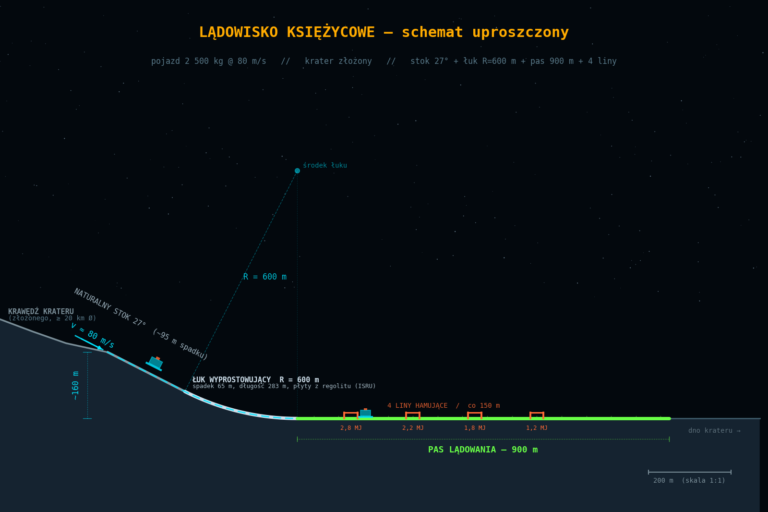
One caveat right away about the status of these projects: they’re things worked out more within fascinating, hours-long conversations with an LLM than material submitted for publication. Full of details I’m not revealing for now — concerning the exploration of Venus, Phobos, Europa, and the Moon. These aren’t texts to be read. They’re rather a way of thinking that had to discharge itself somewhere — and discharged itself into mission concepts no one will ever fly.
The problem isn’t that people aren’t interested in space. They are, very much so. Just not this space.
The Niche Has Two Meanings — and They Aren’t the Same Meanings
We usually understand the word “niche” as a subcategory of something larger: photography → nature photography → bird-of-prey photography. Each step down is a narrower topic. That’s the first meaning.
But there’s a second: the niche as the number of people in the world who actually think about something. And these two dimensions don’t go hand in hand at all. You can pick a subcategory that sounds narrow yet still gathers millions of people. You can also sit in a huge, popular category — and go three floors down within it, to the point where a handful of people on the whole planet remain.
Loneliness in a niche doesn’t come from the choice of category. It comes from the depth of the descent.
Space Is Not a Single Interest
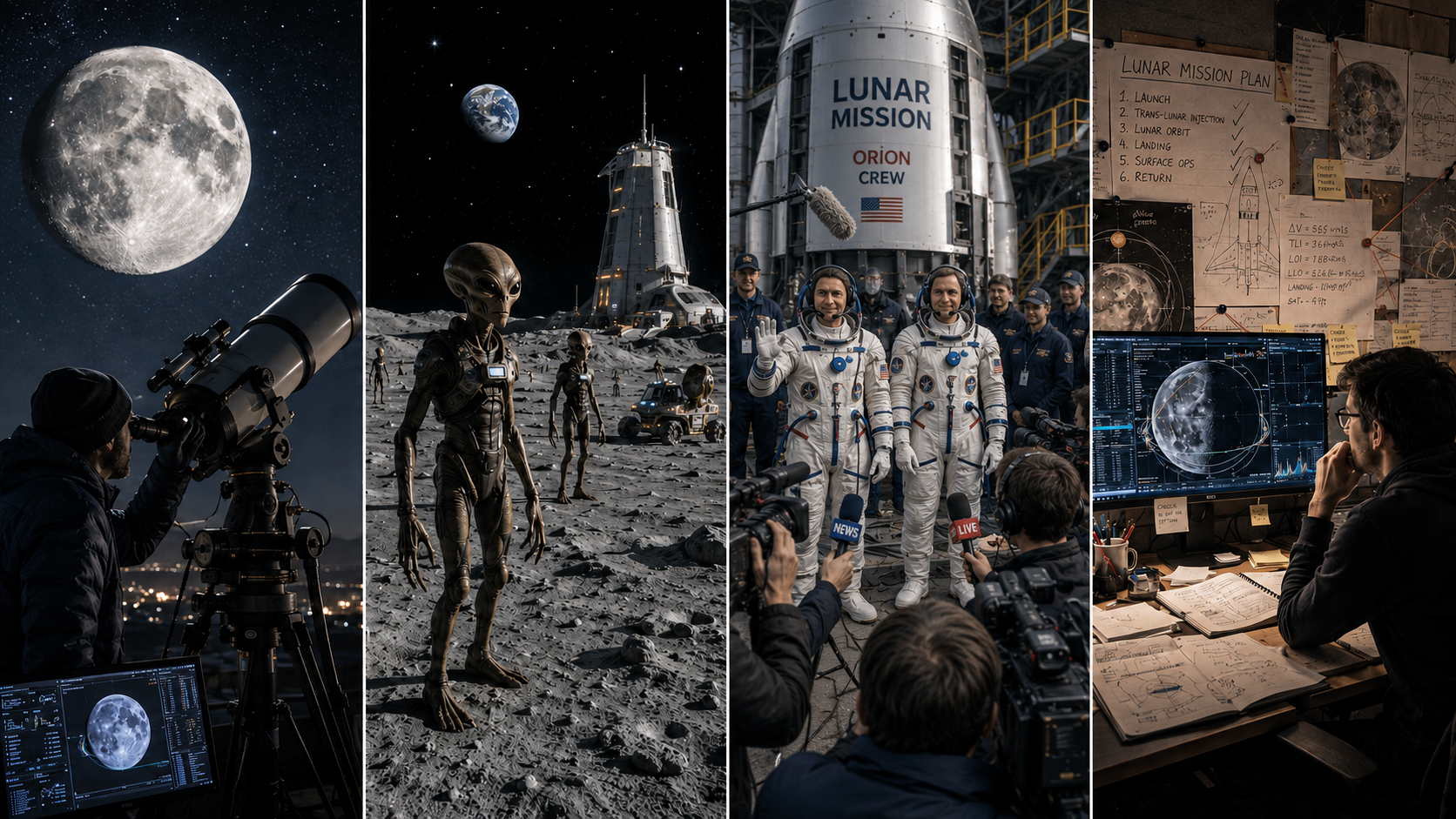
“I’m interested in space” — that sentence describes at least two different populations that rarely mix.
The first is observation: astrophotography, telescopes, auroras, deep-sky objects. A vibrant, large, and superbly organized community. It has gear you can buy, guides you can follow, and — crucially — a result you can show. A photo of a nebula taken from your own backyard speaks for itself in three seconds. Observation is a niche in the first meaning (a subcategory of astronomy), but decidedly not in the second: the people who look at the sky and document it number in the millions worldwide. And that’s a good thing — it’s a beautiful hobby to which we owe a large part of astronomy’s popularity in general.
The second population is exploration: thinking about how to physically get somewhere and do something there. Here there’s no instant, visual product. There’s no backyard photo. There’s a mass budget, a launch window, a thermal budget. The audience shrinks immediately.
A little reality check: I threw a few terms from the last five years into Google Trends, on a global scale. The topic “Moon” — as an object, a celestial body — holds steady, high interest across the whole period. The topic “Venus” on the same chart is a fraction of that level. And the topic “Moon exploration”? Over five years it practically never peels away from zero. Not “little” — zero, on a scale where the Moon itself bounces between 50 and 100. People want to look at the Moon. Thinking about how to move around on it is, against the backdrop of that interest, a measurement error.(Google Trends Wenus, Moon, Europa(moon))
Data: Google Trends, worldwide, 5 years. Compared “topics”: Moon (natural satellite) and Venus (planet), plus the search query “Moon exploration.” The Trends scale is relative (0–100).
Three Layers of Exploration — and Their Audiences
But even within exploration, things aren’t uniform. I see three layers there, each with a completely different number of recipients.
Real missions. Artemis, probes to the icy moons, rovers. A large audience — because there’s an agency, a budget, a launch date, and a live broadcast. You’re rooting for something real, with real risk and real stakes. This is the healthiest kind of interest in space, and I’m glad for everyone who watches a rocket launch at three in the morning.
Fiction. Films, books, games, series. A powerful audience — because there’s a plot, a hero, emotions. Space as a backdrop for a human story. And again: nothing wrong with that. A good share of the people working on real missions today started with fiction. Fiction is the gateway.
Realistic amateur projects. My zone. Not fiction — because here you count, balance, check what agrees with physics and what doesn’t. But also not an official mission — because no one will build it, there’s no budget, no agency, no launch date. This layer falls out of both large groups at once: for fiction fans it’s too dry, for the world of real missions it’s “just a hobby.” Audience: rounding honestly — zero.
The Anatomy of Loneliness
Why is that middle layer the emptiest? Because it requires the intersection of two rarities. For such a project to really pull someone in, that person must simultaneously understand the real physics of a given place and feel like playing with a concept known from the start to remain on paper. Each of these conditions alone is met by few people. Both at once — a handful.
And the paradox is that the very thing that filters out the audience is the tastiest part of these projects: the moment a pretty vision collides with reality.
You can imagine an elegant space harbor on Phobos — a small moon, close to Mars, sounds like the perfect stopover. The vision is beautiful right up to the moment you start calculating how to even land in such negligible gravity, and how to then move around without bouncing off the surface into space. What looks like a port in a picture turns out, in the numbers, to be a technical nightmare — and suddenly the project becomes ten times more interesting, because you have to invent something that isn’t in any picture.
Or Venus. Intuition says: exploration means landing, the surface, a rover. But the surface of Venus is a place that devours probes in tens of minutes. Yet a few dozen kilometers higher — around 55 km — the pressure and temperature become surprisingly close to Earth’s. And suddenly the most interesting question isn’t “how to land,” but “how not to land” — how to live and work in the atmosphere. A completely counterintuitive conclusion, following directly from the numbers, not from imagination.
That kind of pleasure — when reality improves the dream and something better than the dream comes out of it — is hard to show in three seconds. You can’t post it as a backyard photo. And that’s why 99% of potential conversation partners drop off before the conversation even begins.
Value That Doesn’t Wear Out
Here I could strike a tone of regret. But let’s try an honest accounting.
Suppose that instead of a mission project I’d made something purely for entertainment — say, a small one-evening game. That’s not a worse choice; it’s a different kind of value. Entertainment gives a moment of attention — your own and someone else’s — and that’s its role. But that value wears out: you know the plot after the first playthrough, the mechanics after the second.
A realistic exploration project works the other way around:
It teaches you something real about the world — physics, thermodynamics, the limits of materials. That knowledge doesn’t vanish when the project closes; it carries over to everything that follows.
It forces you to think like a mission engineer — for free. Colliding a vision with numbers, searching for the point where “pretty” loses to “possible,” is a skill that stays with you for life and works far beyond space.
And finally: a model that agrees with reality is durable. It doesn’t age like a trend, doesn’t bore like a plot. Five years from now it will be just as true.
The price is known up front: an audience near zero. But it’s not the same currency. Reach and depth are two different accounts.
A Handful Is Not Zero
Yes, people in this niche are in a sense condemned to loneliness. Not through a mistake in choosing the topic, but through honesty toward their own curiosity — they went where curiosity led, not where the audience waited.
But that loneliness has another side, one talked about less often. No audience also means no pressure. No trends to chase. No need to simplify anything for an algorithm. You can do the thing exactly as deeply as you want — and that’s a luxury creators in large niches often envy in those from small ones, though they rarely say it out loud.
And there’s one more thing. Mass content spreads wide and shallow: a short watched today will be forgotten in five minutes, because that’s its nature and no one promised otherwise. A niche too small hits rarely — but when that one person who stands at the same point of intersection finally comes along, the project means disproportionately much to them. Not “interesting, scrolling on,” but “I was waiting for this without knowing I was looking for it.”
Rarely, but deeply. Maybe that’s exactly how niches too small work. And maybe “too small” was the wrong word from the start.
As an aside: this isn’t a farewell-to-the-topic piece, rather a part of the routine. After a few months of publishing, I’m once again reviewing the directions I’m heading in — not to plow blindly ahead, but to notice the realities and calibrate to them. Sometimes such a review ends in a change of course, sometimes — as here — in reaffirming it, only with a better understanding of why.